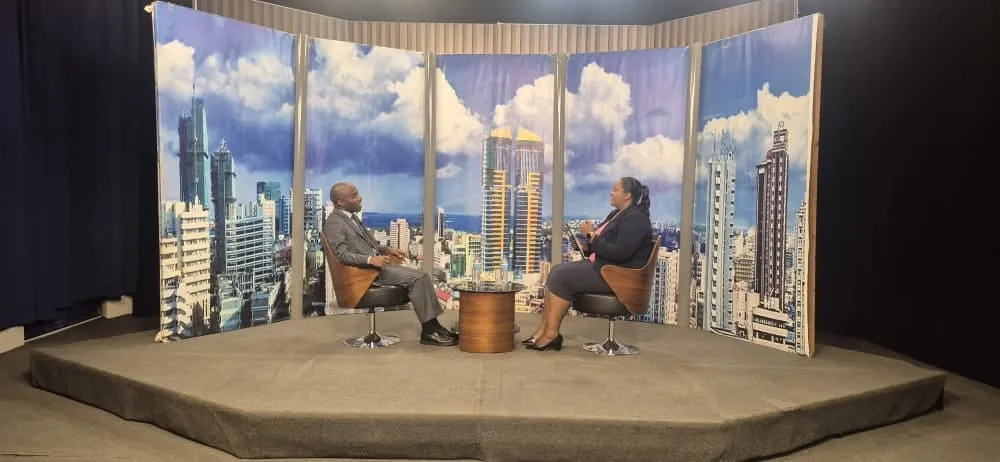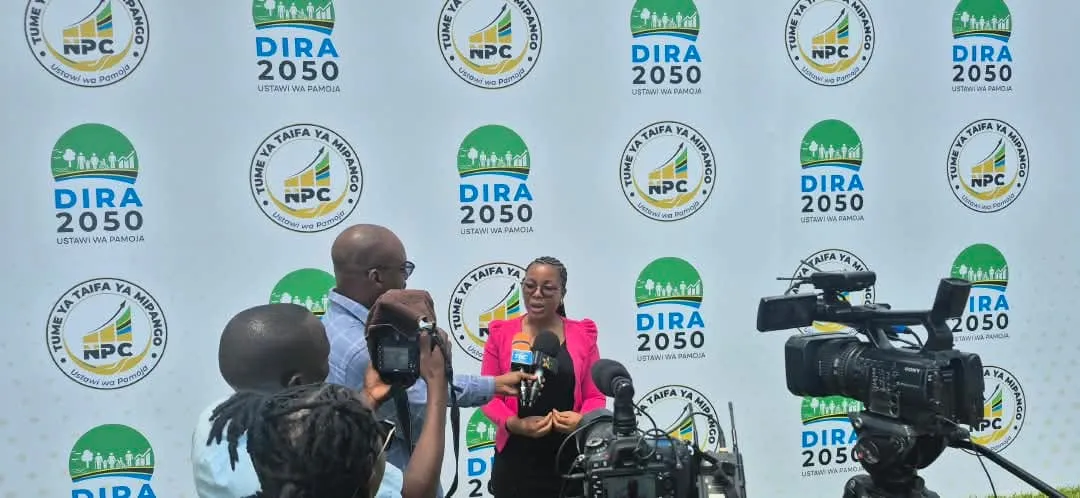
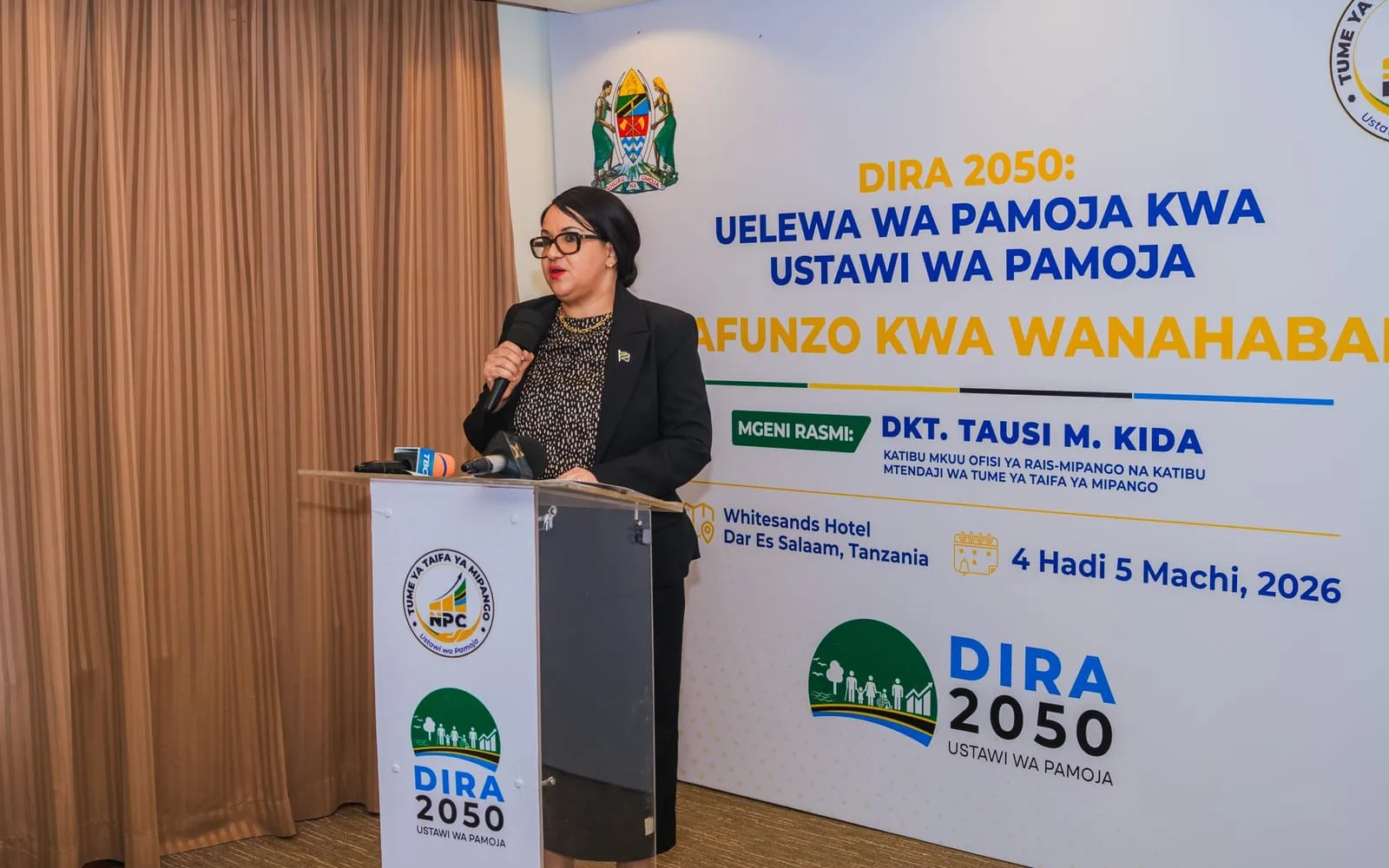
Native Media supported media understanding and visibility around DIRA 2050 by connecting journalists with government stakeholders, coordinating broadcast opportunities, and translating complex development priorities into clearer public-facing narratives.
Context and framing
Native Media was initially engaged by the contractor earlier, in 2025, when stakeholder conversations began to launch the Vision in Dodoma.
The ask
Support the launch and national visibility of Tanzania Development Vision 2050, while strengthening media and stakeholder understanding of the Vision so that its priorities could be communicated clearly and accurately to the wider public.
Strategic objective
Build strong public visibility around the launch while equipping media stakeholders with sufficient understanding of the Vision’s priorities, ambitions and implications to communicate them effectively to Tanzanian audiences.
Local intelligence
Native Media identified a gap between communications activity and narrative infrastructure. Multiple communication activities were being implemented, but there was limited execution of the overarching narrative architecture connecting the Vision’s priorities, stakeholders and public messaging. The communications environment was shaped by compressed timelines and a changing government and political calendar, requiring messages, media engagements and execution plans to be repeatedly adapted. This reinforced the need for a flexible, coordinated and intelligence-led communications approach rather than a sequence of stand-alone activities.
Our approach
Native Media mapped and engaged relevant national and regional media outlets to strengthen both visibility and media understanding of the Vision. Working around engagements led by the Planning Commission, we supported media access and knowledge-building while creating stronger linkages between journalists and government stakeholders.
Media intelligence and targeting
Identifying outlets with the relevance and audience profile to extend the Vision’s reach.
Stakeholder–media linkage
Coordinating access between journalists and government stakeholders for interviews and deeper explanation.
Message translation
Helping convert complex national-development priorities into clearer narratives that could travel through broadcast and digital media.
What we delivered
Media relations
Coordinated media interviews and facilitated engagement between journalists and government stakeholders.
Media tours and engagement
Supported structured media access and information-sharing around the Vision.
Launch visibility
Mobilised broadcast and digital coverage around the DIRA 2050 / Tanzania Development Vision 2050 communications period.
Message translation
Supported the conversion of complex policy and development priorities into more accessible media narratives.
The narrative
A central narrative was to position the private sector as a major driver of Tanzania’s long-term development ambitions under Vision 2050, reinforcing the importance of stronger private-sector participation in national economic transformation.
Execution and results
The post-launch media engagement programme ran across April–May 2026 and combined long-form television interviews, regional radio coverage and social-media amplification. Coverage was distributed across Crown TV, TBC1, Star TV, ITV and Uvinza FM, with additional Instagram posts from Crown TV TZ and Uvinza FM.
The DIRA 2050 Media Coverage Report recorded the following outputs across television, radio and social media during April–May 2026.
- 9Total placements
- TZS 69.9MReported AVE
- TZS 209.8MReported PR value
- 4TV broadcasts
- 1Radio broadcast
- 4Instagram posts
| Channel | Placements | Airtime / output | AVE (TZS) | PR value (TZS) |
|---|---|---|---|---|
| Television | 4 | 165 min 35 sec | 55,411,666 | 166,234,998 |
| Radio | 1 | 52 min 40 sec | 10,533,333 | 31,599,999 |
| Social media | 4 | 4 Instagram posts | 4,000,000 | 12,000,000 |
What the results show
The five television and radio placements together provided approximately 3 hours 38 minutes of broadcast airtime, calculated from the individual durations reported.
- Television delivered the largest share of reported media value, accounting for 79% of total AVE across four stations.
- The television interviews were long-form rather than brief mentions, with an average airtime of approximately 41 minutes per broadcast, creating more room to explain the Vision in depth.
- Uvinza FM added regional depth in Kigoma, reaching rural and peri-urban audiences beyond the national television footprint.
- Instagram activity extended the broadcast coverage into digital channels, with one Crown TV TZ post and three Uvinza FM posts.
Strategic impact
The engagement established multi-channel visibility for DIRA 2050 across national television, regional radio and social media. More importantly, the long-form broadcast format created opportunities for government stakeholders to explain the Vision beyond headlines, while Native Media’s coordination role helped connect institutional messaging with journalists and their audiences.
The evidence available demonstrates communications reach, airtime and media value. It does not, on its own, prove changes in public perception, stakeholder understanding or behaviour. Those outcomes would require additional audience or stakeholder research. AVE and PR value are media valuation indicators reported by the project media report (PR value uses a 3× multiplier of AVE).
Why Native Media
Native Media brought together national and regional media relationships, local context and the ability to translate complex policy and development priorities into accessible public narratives. The role went beyond securing coverage: it helped connect institutions, media and messaging so that the Vision had stronger opportunities to be understood and communicated effectively.
Capabilities demonstrated
Policy and development communications
Translating a long-term national development agenda into clearer media-facing messages.
Media relations and local intelligence
Identifying relevant outlets and coordinating access across national and regional media.
Narrative translation and stakeholder linkage
Connecting journalists with institutional stakeholders and helping complex priorities travel through public channels.
Strategic learning
Launches, interviews and media tours can create visibility, but sustained understanding requires an overarching narrative system that connects policy priorities, stakeholders, messages, channels and timing. Building that infrastructure earlier would make communications more resilient to shifting calendars and execution windows.
Evidence source
DIRA 2050 Media Coverage Report, April–May 2026, prepared for Gatsby Africa. The report records 9 placements across television, radio and Instagram, with total AVE of TZS 69,944,999 and PR value of TZS 209,834,997 using a 3× PRV/AVE multiplier.