
Business & EconomicsResearch-based analysis
Africa's Farm Output Has Doubled in 20 Years — But Its Farmers Still Earn a Third of the Global Average
AGRA's 20-year report finds real gains in yields and income, and a $180 billion annual financing gap standing between that progress and farmers actually getting paid for it.
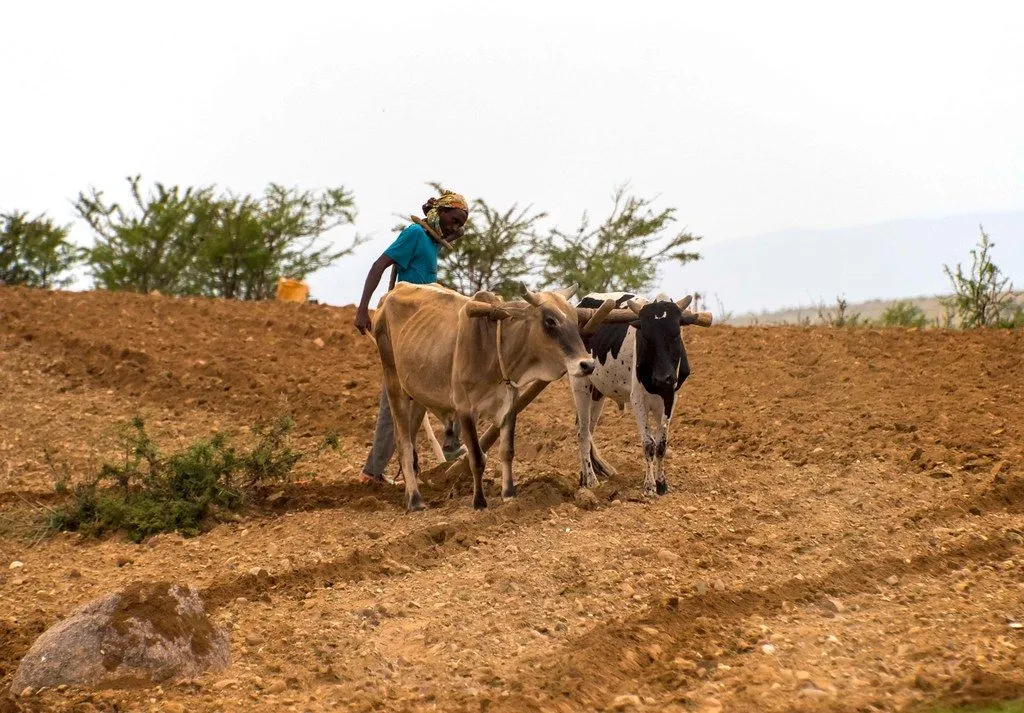
African farm output has roughly doubled in real terms since 2005, and cereal yields are up about 40% over the past two decades, according to AGRA's 2026 Africa Agriculture Status Report, published to mark the organization's 20th anniversary. Average farmer income has doubled over the same period. And the average African farmer still earns roughly $1,500 a year — about a third of the global average of $4,300.
Both of those things are true at once, and the report's real argument is that the second fact is the one that matters more.
Real growth, still a small share of a bigger number
The gains are genuine by the numbers that measure them: agriculture's contribution to GDP growth has risen from 2.3% to nearly 4%, and cereal yields have climbed 40% over 20 years. But doubling a small income base still leaves a small income base — Africa's maize yields average 1.6 tonnes per hectare against a global average of 4 tonnes, and the report's framing is that production growth on its own was never going to close a gap this size. Farmers are producing more and earning more than they were 20 years ago. They are not catching up.
Three traps holding back the bigger payoff
AGRA frames the shortfall as three compounding traps: a productivity trap, where output stays low relative to global benchmarks; a value trap, where the production that does happen doesn't reliably convert into income because storage, processing, and market access remain weak; and a capability trap, where the institutions and skills needed to sustain any of it are still missing in most places. Hailemariam Dessalegn, AGRA's Board Chair and Ethiopia's former Prime Minister, put the throughline directly in presenting the report: "Progress becomes transformation only when productivity is restored, value is retained and capability is sustained." Each trap on its own can absorb a farmer's gains; all three together are why two decades of real yield growth haven't moved the income gap as far as the yield numbers suggest they should.
The $180 billion the sector isn't getting
Behind the traps sits a financing number: Africa's agrifood sector faces an estimated $180 billion annual shortfall, with $65 billion of that specifically needed for small and medium agribusinesses — the processors, aggregators, and input suppliers that turn a harvest into income rather than just a yield figure. The physical conditions compound the financing gap rather than sitting apart from it: roughly 65% of the continent's productive land is degraded, about 45% of its total land area is threatened by desertification, and only about 3% of sub-Saharan Africa's cropland is irrigated. Financing that doesn't account for those constraints buys short-term output, not resilience.
Twenty years of evidence show that Africa's agrifood sector can move when the conditions are right. The task now is to turn that progress into income, resilience, dignity and opportunity for farmers.
— Alice Ruhweza, President, AGRA
What to watch next
AGRA's own record over the past 20 years — 118 seed companies supported, more than 650 improved seed varieties, roughly 5 million farmers trained in climate-smart practices, and $691 million leveraged for national agricultural investment plans — shows what targeted investment can do at a scale far smaller than $180 billion. The next decade's real test isn't whether African agriculture can keep growing output; the last 20 years already answered that. It's whether the financing gap closes fast enough that the next doubling shows up in farmer income at the same rate it shows up in yield data, rather than repeating the same pattern this report describes.
Sources
- 5 Takeaways From AGRA's 2026 Africa Agriculture Report, Africa Agricultural Network — by Vivian Tumushabe, (September 23, 2026)
- Africa's Farm Output Doubles as $180bn Financing Gap Remains, Africa Business, (August 31, 2026)
- Africa's agriculture gains momentum but farmers still trapped by poverty, low returns – AGRA, The Star (Kenya), (August 31, 2026)
Related
Related research, podcast episodes will be linked here. See African Intelligence and Research & Publications.